Quick answer: Choose the exact WaterSense-labeled model—not just a product advertised as “water-saving”—then check its dimensions, connections and operating requirements against your bathroom. Estimate savings from your existing fixtures and actual usage, not a national average. WaterSense certification addresses efficiency and performance; it does not establish installation compatibility or rebate eligibility. EPA provides a product-search tool to help verify labeled models. (lookforwatersense.epa.gov)
U.S. homeowner guide. Rates and rebate information checked November 22, 2026. The worked example uses Seattle, Washington, and U.S. dollars (USD).
1. Verify the label and record the actual water-use rating
WaterSense-labeled products undergo independent certification against EPA efficiency and performance criteria. For bathroom shopping, the relevant categories include tank-type toilets, private bathroom sink faucets and faucet accessories, and showerheads. A low advertised flow rate alone is not proof of certification. (epa.gov)
Use these ratings as a starting point:
| Fixture | Water-use information to compare |
|---|---|
| Single-flush tank-type toilet | Gallons per flush, or gpf; WaterSense models use 1.28 gpf or less |
| Dual-flush toilet | Both reduced- and full-flush volumes; verify the exact labeled model |
| Bathroom sink faucet or labeled accessory | Gallons per minute, or gpm; the current WaterSense maximum is 1.5 gpm |
| Showerhead | Rated flow; WaterSense models use no more than 2.0 gpm |
EPA’s current resources support these criteria. Its revised toilet specification has a paused effective date, with Version 1.2 remaining in effect; therefore, do not assume that every labeled dual-flush toilet has a full-flush maximum of 1.28 gpf. (epa.gov)
For each candidate, save the complete model number, EPA search result, manufacturer specification sheet and installation instructions. Make sure these describe the same configuration you intend to order. Record the actual rating rather than automatically using the category maximum in your savings calculation.
2. Check toilet fit before comparing purchase prices
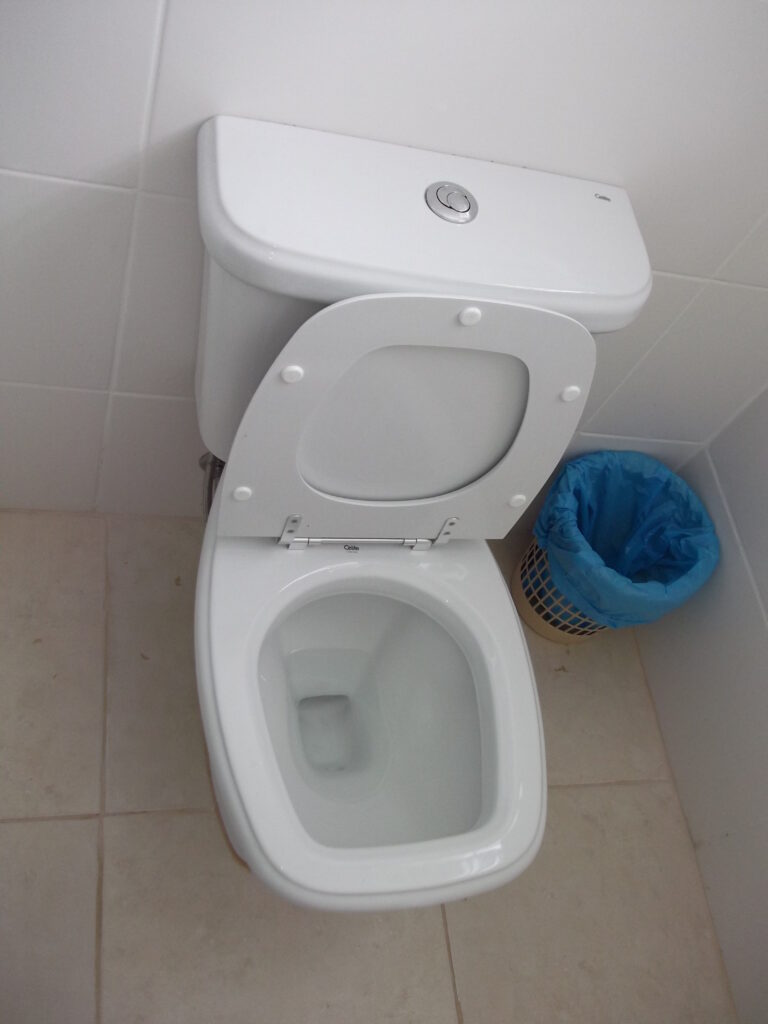
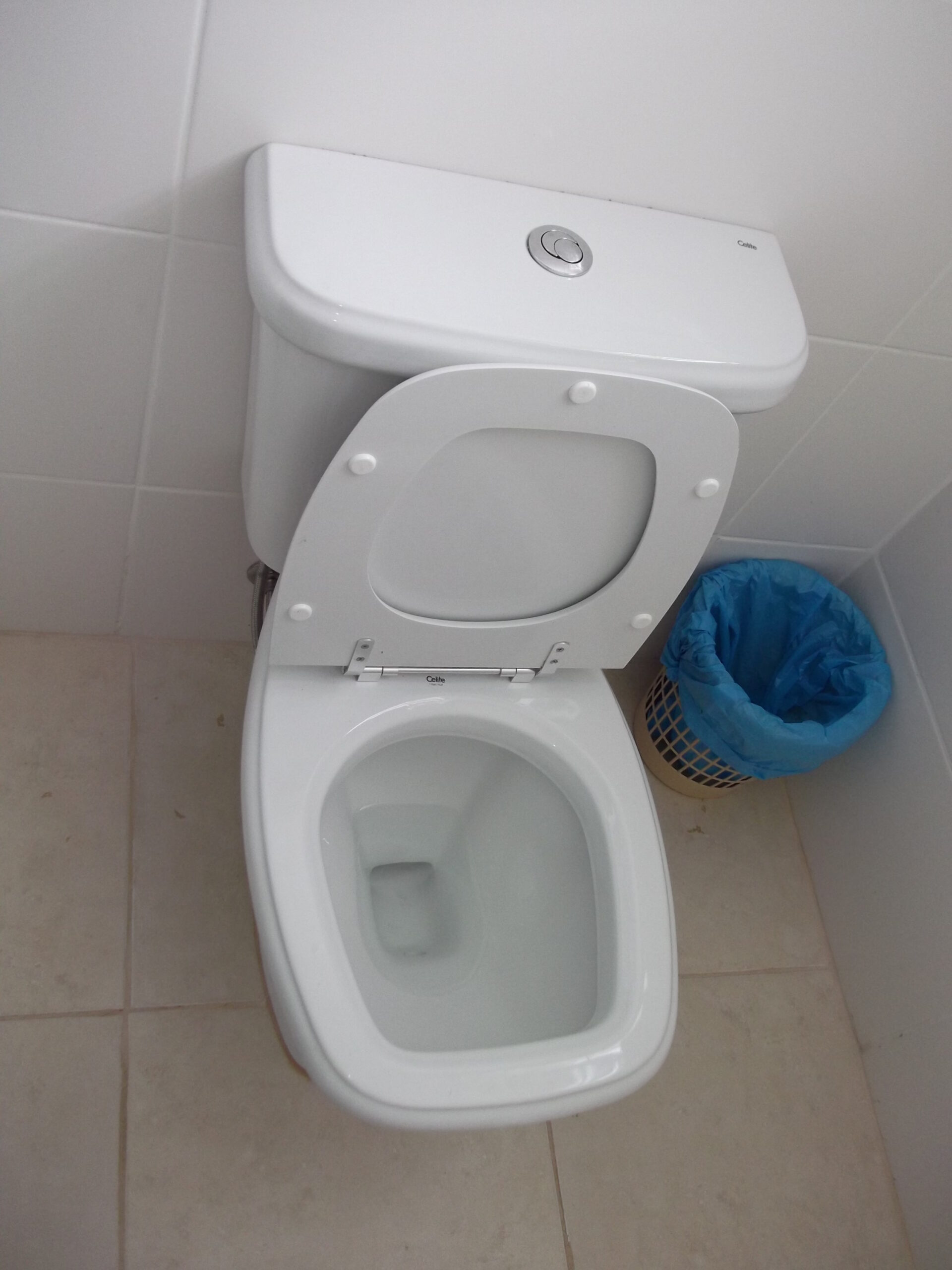
A water-use rating cannot tell you whether a toilet fits the existing installation. Compare the manufacturer’s dimensional drawing with measurements checked by your installer.
Ask the installer to confirm:
- The required rough-in against the existing drain location.
- Floor-outlet versus other installation arrangements.
- Bowl projection, width and clearance around nearby doors and cabinets.
- Seat height and ease of use for household members.
- Water-supply location and any separately purchased installation parts.
These checks follow the information provided in manufacturer drawings; they are not a substitute for local installation requirements. (techcomm.kohler.com)
For example, Kohler’s Highline K-26813 specification sheet lists an elongated bowl, floor outlet, standard 12-inch rough-in and 1.28-gpf flush. It also identifies the supply line as separately sold. Those are specifications for that model—not dimensions or included parts to assume for another toilet. (techcomm.kohler.com)
Keep two comparisons separate: water saved per flush and the cost of installing the selected toilet. Request an installed quote that identifies the exact model, removal and disposal, installation materials, and how unexpected conditions will be priced.
If an existing toilet leaks, arrange repair or assessment rather than treating all current consumption as normal flushing. EPA identifies worn toilet flappers as a common source of leakage. Any leak-related reduction should be distinguished from savings due solely to a lower flush volume. (epa.gov)

3. Decide whether the sink needs a faucet or only an accessory
A functioning bathroom faucet may not need replacement to reduce its flow. WaterSense also labels faucet accessories, including aerators, that can retrofit compatible existing faucets. EPA’s faucet criteria apply to private bathroom sink and bar sink faucets—not every faucet category. (epa.gov)
Before replacing the entire faucet, ask whether a manufacturer-compatible labeled accessory is available. If you are also changing the sink or countertop, coordinate the faucet selection with that work.
For a complete faucet, compare:
- Mounting-hole number, diameter and spacing.
- Permitted mounting-deck thickness.
- Spout height and reach.
- Handle clearance near the backsplash.
- Supply connections and drain assembly.
The manufacturer’s drawing—not the product photograph—should resolve these questions. For instance, Delta’s Saylor 3536-MPU-DST specification sheet identifies a three-hole widespread installation, 4- to 16-inch centers, a minimum backsplash clearance, and a maximum flow of 1.2 gpm at 60 psi. Its included drain is described as having an overflow. Have the installer check that configuration against the selected sink. (media.deltafaucet.com)
Do not assume every new labeled faucet offers the same reduction. Replacing a 2.2-gpm faucet with a 1.2-gpm model creates a different calculation from replacing an existing 1.5-gpm model. First identify what is already installed.
4. Match the showerhead to the shower system
WaterSense showerhead certification includes performance criteria, not just a flow ceiling. EPA evaluates water coverage and spray intensity, and labeled models must be independently certified. This makes the label more useful than an unsupported “high-pressure, low-flow” description. (epa.gov)
However, the showerhead still needs to work with the existing shower system. The U.S. Department of Energy advises verifying that the automatic compensating mixing valve—thermostatic or pressure-balancing—is designed for the showerhead’s flow rate. It recommends consulting a local plumber where necessary to reduce risks from temperature fluctuations. (energy.gov)
Ask your plumber:
- Is the existing valve suitable for the proposed flow?
- Are the shower arm, handheld connection and mounting arrangement compatible?
- Will more than one outlet operate at the same time?
- Is unusual flow or temperature behavior a system issue requiring assessment?
If multiple outlets will run simultaneously, request the combined operating flow for the savings estimate. Do not base the calculation on one component while assuming the others use no water.
Reduced shower flow saves water only to the extent that usage time does not offset the reduction. Track typical shower duration before choosing the assumptions for your budget.
5. Check the utility’s rebate rules before buying
WaterSense certification and rebate qualification are separate checks.
As checked on November 22, 2026, the Saving Water Partnership’s household toilet program advertises up to USD $100 per toilet, for up to two replacements per household. Seattle Public Utilities is a participating utility. The program covers specified residential property types and requires service from a participating utility. (savingwater.org)
The program’s published requirements are narrower than “buy a WaterSense toilet”:
- The exact replacement model must be rebate-eligible.
- Eligible models use 1.1 gpf or less and meet the program’s performance requirements.
- The application must be submitted within 60 days of purchase.
- The paid receipt must identify the purchase date, model number and price. (savingwater.org)
Consequently, do not budget a rebate merely because a toilet is labeled or uses 1.28 gpf.
Before ordering, confirm the current application terms, eligible model, service address, documentation and deadline. If a contractor supplies the fixture, request the required information on an itemized paid invoice; the Partnership specifically addresses contractor purchases in its receipt guidance. (savingwater.org)
Treat the rebate as a separate, conditional budget line until eligibility and approval are established.
6. Calculate savings from your bathroom: a Seattle example
Start with two formulas:
Toilet gallons avoided = (old gpf − new gpf) × flushes
Faucet or shower gallons avoided = (old gpm − new gpm) × running minutes
The following is a hypothetical two-person household, not measured customer data. Assume all the listed use occurs at the fixtures being replaced, over 90 days entirely within Seattle’s 2026 off-peak water-rate period.
| Fixture | Assumed existing rating | Proposed rating | Assumed household use | Gallons avoided in 90 days |
|---|---|---|---|---|
| Toilet | 1.6 gpf | 1.28 gpf | 10 flushes daily | 288 |
| Showerhead | 2.5 gpm | 2.0 gpm | Two eight-minute showers daily | 720 |
| Bathroom faucet | 2.2 gpm | 1.5 gpm | Four running minutes daily | 252 |
| Total | 1,260 |
These baseline and replacement ratings are consistent with the standard and labeled-product examples EPA describes, but they must be replaced with your own fixture information. (epa.gov)
For inside-city residential customers, Seattle’s published 2026 off-peak commodity rate is USD $5.82 per CCF, applying September 16–May 15. Seattle defines one CCF as 748 gallons. (seattle.gov)
The estimated water-commodity reduction is therefore:
1,260 ÷ 748 × USD $5.82 = approximately USD $9.80 over 90 days.
This is not the reduction in the entire utility bill. It excludes sewer charges, hot-water energy, leaks, rebates and installation costs. It also does not reduce the meter’s fixed base service charge. Seattle lists that charge separately from water consumption. (itservicehub.seattle.gov)
The starting point makes a substantial difference. If the assumed old toilet used 3.5 rather than 1.6 gpf, with everything else unchanged, total avoided consumption would be 2,970 gallons and the same water-only calculation would be approximately USD $23.11.
Behavior matters too: two ten-minute showers at 2.0 gpm use the same 40 gallons as two eight-minute showers at 2.5 gpm.
For your estimate, use actual flush counts and running minutes, distinguish leaks from normal use, and apply your utility’s relevant seasonal or tiered consumption charge. Calculate sewer and energy effects separately only after verifying their billing rules and necessary inputs. Do not turn this limited example into a promised annual saving or payback period.
7. Use a final purchase and installation checklist
Before authorizing an order, put the following into one comparison sheet:
| Check | Evidence to keep |
|---|---|
| Certification | Exact model and WaterSense search result |
| Water use | Flush volumes or rated flow |
| Compatibility | Manufacturer drawing and installer confirmation |
| Installed scope | Itemized proposal, including exclusions |
| Rebate | Current rules, eligible model and required receipt |
| Savings | Existing ratings, use assumptions and applicable rates |
The common mistakes are buying from a water-saving slogan, overlooking fit, assuming a rebate applies, and treating an average savings claim as a household forecast. Certification, manufacturer documentation and utility rules answer different questions; none replaces the others. (lookforwatersense.epa.gov)
At handover, ask the installer to demonstrate operation, check for leaks, and provide the model information and maintenance documents. Report unexpected shower temperature changes rather than accepting them as a normal consequence of efficiency. DOE’s guidance emphasizes both leak correction and matching the showerhead to the compensating valve. (energy.gov)
The practical goal is a fixture that is verified, fits the bathroom, works with the plumbing and has a transparent installed cost. Build the savings estimate around that choice—not the other way around.