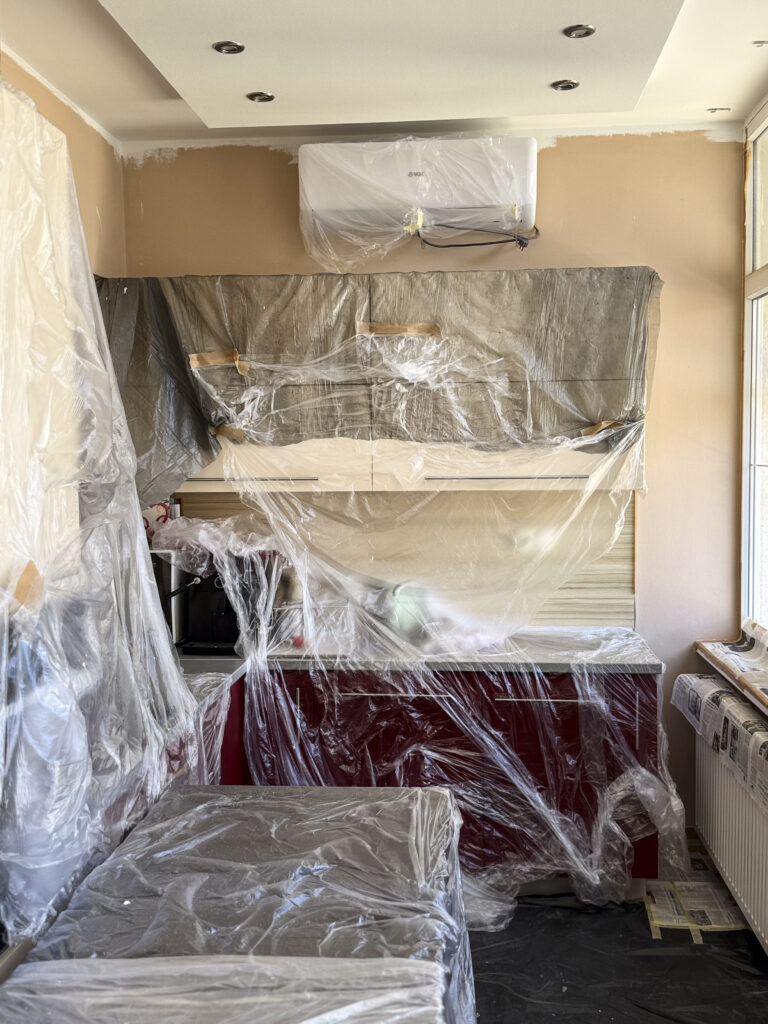
Quick answer: Size your remodel contingency around the unresolved risks in your project—not a percentage alone. First budget the complete planned scope, realistic selections and household disruption. Then set aside a separate reserve for plausible unexpected work. Test whether that reserve could absorb several problems together, and track approved and pending changes against it.
Planning formula: Planned project costs + household disruption budget + contingency reserve + optional upgrade budget = total funding target.
The method below is a planning framework, not a guaranteed budget. All worked examples are fictional, dated November 22, 2026, located in Seattle, Washington, and expressed in U.S. dollars.
1. Separate contingency from costs you already expect
For this planning method, contingency means money held for necessary costs that remain uncertain after reasonable preparation. Do not use it to make an incomplete proposal look affordable.
Start with four separate budget categories:
| Category | What belongs there | How to handle it |
|---|---|---|
| Planned project costs | Agreed work, selected materials, design, applicable taxes, delivery and permit estimates | Include before calculating the reserve |
| Unresolved selections | Fixtures, tile or appliances not yet chosen | Carry explicit allowances and check them against actual selections |
| Contingency | Plausible unexpected work within the intended project | Keep a separate balance and risk list |
| Optional upgrades | Better finishes, added features or expanded scope | Fund separately or defer |
Also budget for your household arrangements: meals without a kitchen, storage, or alternative bathroom access. Decide which arrangements you will actually need rather than hiding them in a general cushion.
The FTC recommends getting multiple written estimates describing the work, materials, completion date and price. It also advises asking why estimates differ substantially rather than automatically choosing the lowest bid. Use that comparison to identify missing scope before setting your reserve. (consumer.ftc.gov)
Practical check: If you already know you want a particular sink, obtain its complete installed cost. An allowance below that amount is a known funding gap—not a surprise.
2. Build a short risk register before choosing a percentage
Ask each bidding contractor to identify uncertainties in the same format:
- Risk: What condition or decision remains unresolved?
- Evidence: What is known, and what cannot yet be confirmed?
- Budget exposure: What additional work might be necessary?
- Next action: Who can investigate or price it?
- Decision point: When must it be resolved?
For a kitchen, discussion prompts might include concealed conditions behind cabinets, appliance installation requirements and the extent of utility changes. For a bathroom, ask about the proposed scope beneath existing finishes, responsibility for concealed damage, and what happens if the planned fixture arrangement needs revision. These are questions for qualified professionals, not diagnoses of your home.
Separate each item into:
- Resolvable before signing: Obtain a selection, assessment or written scope clarification.
- Uncertain until work progresses: Document the assumption and a pricing process.
- Optional: Put it in the upgrade budget.
Older-home paint disturbance deserves early attention. EPA says pre-1978 homes are more likely to contain lead-based paint and recommends hiring a lead-safe certified contractor for renovation work. Ask appropriately qualified professionals how assessment and lead-safe work affect the proposal; do not investigate by disturbing suspect materials yourself. (epa.gov)
A useful reserve calculation begins with fewer unknowns—not merely a larger cushion.
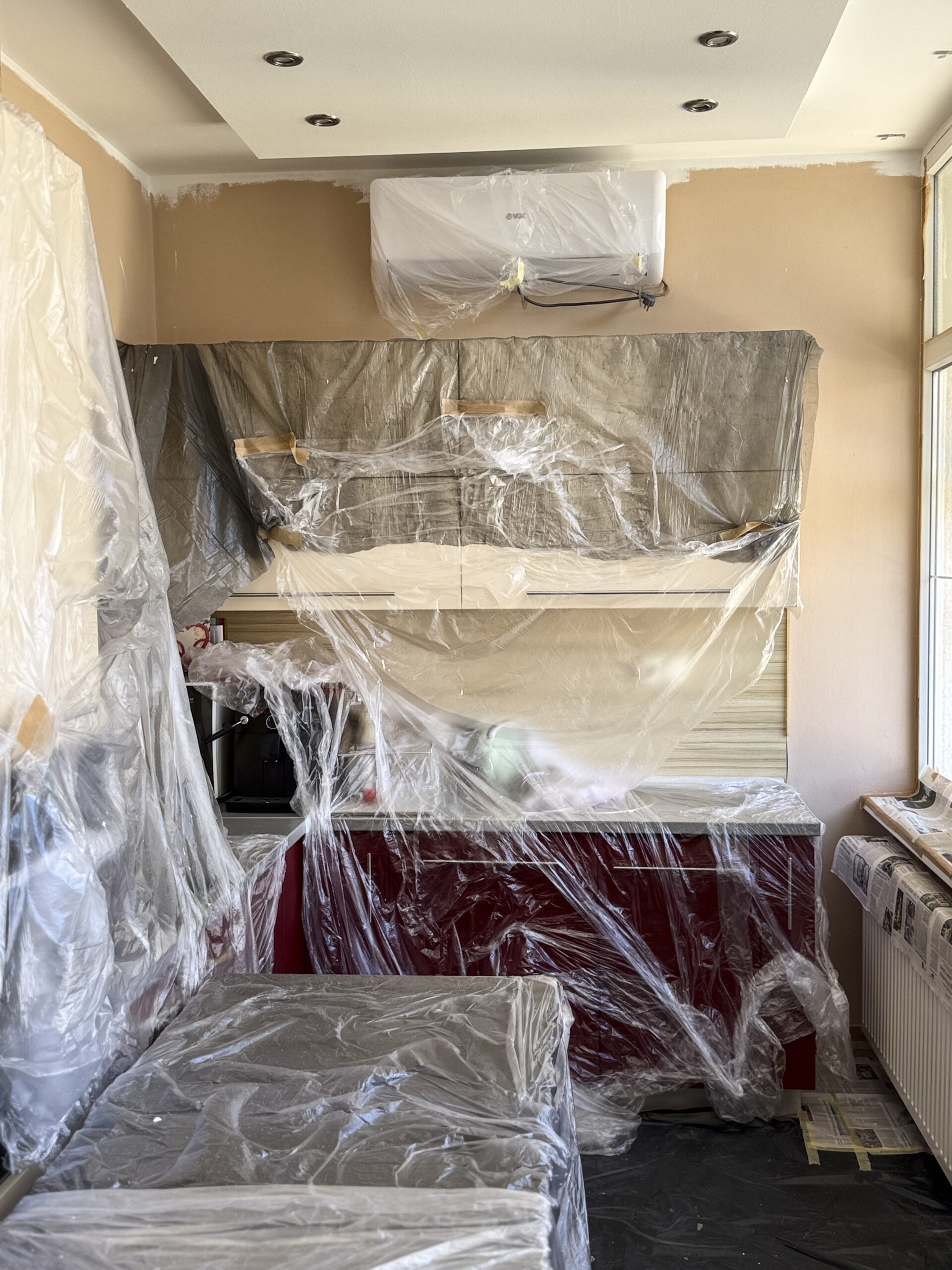

3. Test combined risks, then calculate the percentage
Instead of starting with “add 15%,” ask your contractor to help price credible scenarios. Request scope-specific ranges where a firm price is not possible.
Use three planning cases:
- Limited-change case: A small correction is needed, but major assumptions hold.
- Combined-risk case: Two or more related problems require work.
- Stress case: A larger unresolved issue occurs alongside an ordinary change.
Do not assign precise probabilities without evidence. A made-up likelihood can make a weak estimate appear scientific. For a single household project, the more useful question is: Could we fund this plausible combination without abandoning necessary work?
Then express the resulting reserve as a percentage:
Contingency percentage = reserve ÷ stated budget base × 100
Always identify the denominator. A reserve equal to 15% of the construction contract is not necessarily 15% of the full project budget.
For a documented regional input, Seattle’s official 2026 fee summary lists an SDCI base hourly rate of $292, effective January 1, 2026. That is a permitting agency rate—not a contractor labor rate or a complete permit price. (cityofseattle.org)
If three additional hours were billed at that rate, the arithmetic would be 3 × $292 = $876. This is a hypothetical sensitivity check, not a prediction that your remodel requires three extra hours. Confirm the applicable fee category and complete estimate with the agency.
4. Worked kitchen example: protect the reserve from selection gaps
Fictional Seattle kitchen budget, November 22, 2026; USD. Assume cabinet and countertop replacement, the existing layout retained, no planned structural work, and professional installation. Every amount below is invented to demonstrate budgeting—not a Seattle market estimate or contractor quote.
| Budget component | Illustrative amount |
|---|---|
| Contractor scope, including stated selection allowances | $48,000 |
| Owner purchases, design and permit budget outside that scope | $7,000 |
| Planned project subtotal | $55,000 |
| Household disruption budget | $2,000 |
| Contingency reserve | $8,000 |
| Separate optional upgrade budget | $1,000 |
| Total funding target | $66,000 |
The reserve is $8,000 ÷ $55,000 = 14.5% of planned project costs, rounded. That percentage describes this example; it does not establish an adequate reserve for another kitchen.
Now assume two necessary, approved changes total $3,700. The reserve falls to $4,300.
Next, the owner chooses appliances costing $1,200 more than the amount already budgeted. That is a selection overrun. If the owner uses the $1,000 upgrade budget, another $200 must come from a documented scope reduction, additional funds or the contingency.
If that $200 comes from contingency, the reserve becomes $4,100. Record the transfer explicitly; otherwise the budget may still appear to have $4,300 available.
This illustrates why unresolved selections need attention before construction. Ask for each allowance to state:
- The exact category and quantity covered.
- Whether tax, delivery and installation are included.
- How credits and overruns will be calculated.
- Whether handling or markup applies.
Treat those as contract questions rather than assuming every contractor uses the same allowance terms.
5. Worked bathroom example: a larger percentage can still be short
Fictional Seattle bathroom budget, November 22, 2026; USD. Assume a full bathroom renovation retaining fixture locations, with concealed conditions unresolved. The amounts are illustrative only.
| Budget component | Illustrative amount |
|---|---|
| Planned project costs, including professional work and stated permit budget | $24,000 |
| Alternative bathroom arrangements | $1,000 |
| Contingency reserve | $6,000 |
| Total funding target | $31,000 |
The reserve equals 25% of planned project costs. That sounds substantial, but test the risks rather than the label.
Suppose the homeowner and contractor use these invented stress-test amounts:
| Hypothetical additional work | Amount |
|---|---|
| Concealed-condition repair and associated reinstatement | $3,800 |
| Additional necessary utility work | $1,700 |
| Further finish restoration outside the original scope | $900 |
| Combined exposure | $6,400 |
The reserve is $400 short, despite being 25%.
Before treating that result as useful, check for overlap. Does the $3,800 already include any restoration counted in the $900? Are these genuinely additional costs, or obligations already included in the contract? Count only incremental costs.
If the combined scenario remains credible, consider obtaining further professional assessment, increasing the reserve, simplifying the planned scope or delaying the project. Do not assume a high percentage makes an unpriced risk affordable.
For unresolved bathroom fixtures, complete the selection and compatibility checks before calling the budget settled.
Read next: Choosing WaterSense Bathroom Fixtures: Labels, Fit and Realistic Savings
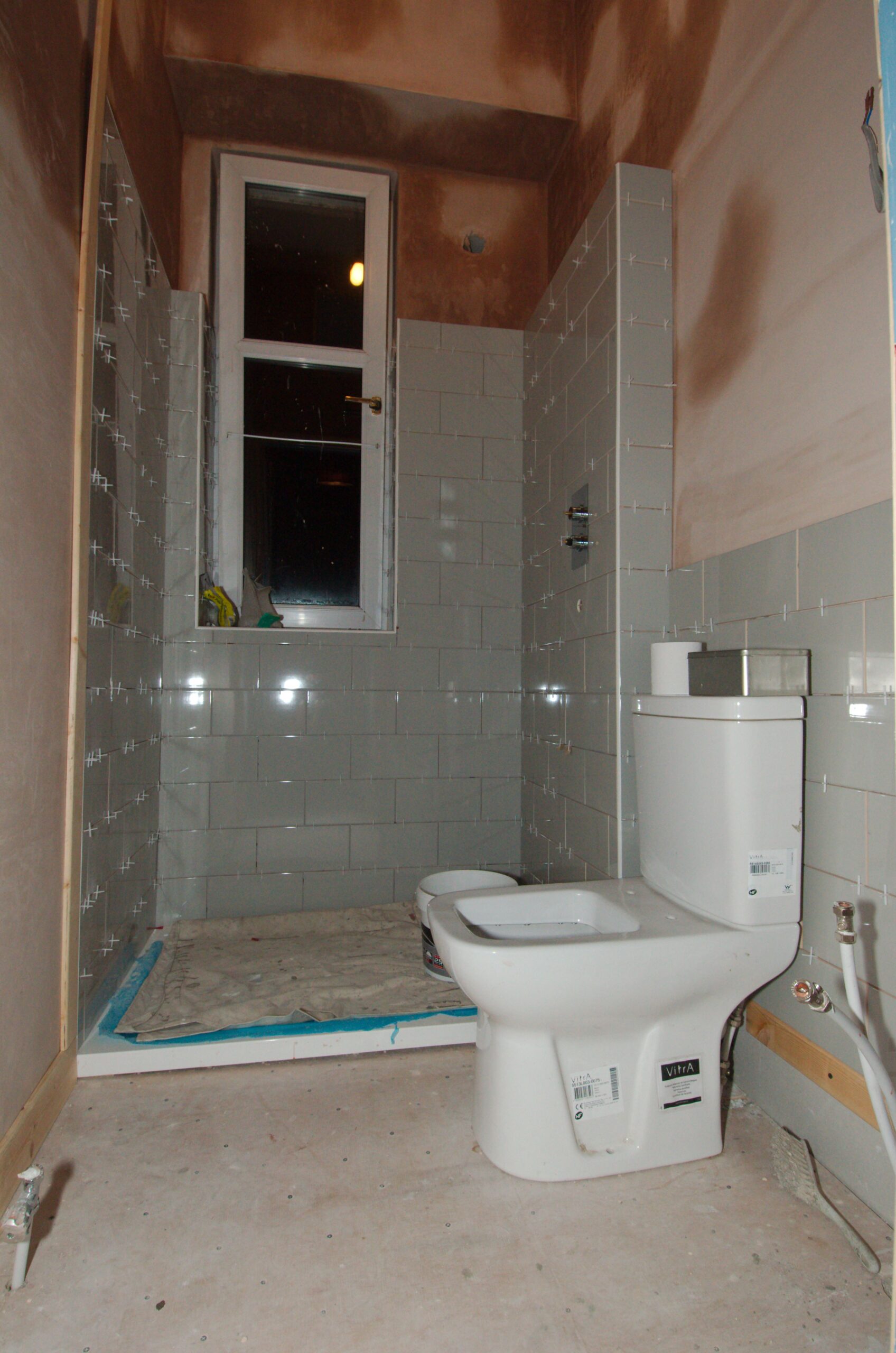

6. Put reserve spending behind a written change process
Before signing, ask how the contractor will document additional work. Request a process that identifies:
- The reason for the change and supporting observations.
- Whether it is required work, a selection overrun or an owner upgrade.
- The scope being added or removed.
- The price, credits and applicable markup.
- Any schedule or payment changes.
- Who must authorize it before work proceeds.
The Texas Attorney General’s consumer guidance warns that changing an order may involve a service charge and recommends addressing that in the contract. This is a useful question for homeowners elsewhere, but contract requirements must be checked locally. (texasattorneygeneral.gov)
Also ask whether the contractor’s proposal already contains a contingency or provisional sum. Document who controls it, what it covers, how spending is reported and what happens to unused money. Do not silently count the same protection twice.
Keep reserve availability separate from the payment schedule. The FTC advises against paying the full project amount upfront and notes that some states limit down payments. Check local requirements rather than treating a funding reserve as permission for an additional advance. (consumer.ftc.gov)
7. Track remaining exposure—not just remaining cash
Update one reserve log whenever a change is approved or a new risk appears.
| Reserve log item | What to record |
|---|---|
| Opening reserve | Original amount held |
| Approved changes | Full authorized amount, paid or unpaid |
| Pending exposure | Estimated additional cost awaiting assessment or approval |
| Remaining uncommitted reserve | Opening reserve minus approved changes |
| Stress-tested headroom | Uncommitted reserve minus pending exposure |
Using the kitchen example before the appliance decision: $8,000 − $3,700 = $4,300 remains uncommitted. If another issue has a provisional exposure of $2,000, stress-tested headroom is $2,300.
That $2,000 is not an approved charge. Tracking it simply prevents you from treating potentially needed funds as available for upgrades.
Avoid these common mistakes:
- Counting only paid invoices: Approved but unpaid work has already committed funds.
- Calling every overrun unexpected: A knowingly inadequate allowance belongs in the baseline correction.
- Treating contingency as a spending target: Unused reserve need not become extra scope.
- Releasing funds too early: First reconcile outstanding changes, invoices and unresolved work.
- Ignoring an affordability gap: If credible remaining exposure exceeds available funds, revisit scope before authorizing optional work.
Before committing to the remodel, be able to state your planned cost, unresolved selections, reserve, major remaining risks and change-approval process. If those are still unclear, the next step is better information—not a more reassuring percentage.