Quick answer: Compare bathroom quotes by the work included—not just the total. First identify whether each proposal covers a powder-room update, a complete bathroom renovation or only a tub-to-shower conversion. Then require matching descriptions of demolition, fixtures, waterproofing, plumbing, ventilation, finish repairs, permits and allowances. The FTC recommends multiple written estimates and cautions against automatically choosing the lowest bidder. (consumer.ftc.gov)
A useful comparison ends with two lists: the agreed work each contractor has priced and the unresolved items that could change your spending. Do not treat an unanswered question as an included item.
This guide uses Seattle, Washington, pricing from the 2025 Cost vs. Value report, in U.S. dollars, as a dated regional reference—not a current contractor quote or a national bathroom budget. (jlconline.com)
1. Define which bathroom project each quote actually covers
Before requesting revisions, send every bidder the same scope outline. Use the following as starting templates, then adapt them to your home.
| Project | Example scope to request | Boundary to make explicit |
|---|---|---|
| Powder-room update | Replace toilet, vanity, sink and faucet; specify flooring, lighting, mirror, painting and disposal | Whether plumbing locations remain unchanged and whether ventilation work is included |
| Full-bath renovation | Replace the bathing area and other fixtures; identify demolition, wall and floor assemblies, ventilation, electrical work and finish restoration | Whether the room is being stripped back or selected surfaces are being retained |
| Tub-to-shower conversion | Remove the tub; install a specified shower base, wall system, drain connection, valve/trim and enclosure | Whether the rest of the bathroom remains untouched |
These are comparison templates, not promises about what contractors normally include.
Ask for a retain/remove/replace schedule. For example: “retain toilet and vanity; remove tub and surround; replace shower assembly; restore affected flooring and painted walls.”
Be especially precise about the phrase fixture replacement. Request separate entries for the visible faucet or shower trim, any concealed valve replacement, and changes to water or drainage piping. Also identify who supplies each product.
The FTC says a written estimate should describe the work, materials, completion date and price. Use that as the minimum standard, then add the bathroom-specific boundaries above. (consumer.ftc.gov)

2. Use regional prices as context—not as interchangeable quotes
The 2025 Seattle Cost vs. Value report lists these job costs:
| Defined project | Seattle job cost, USD |
|---|---|
| Midrange bathroom remodel | $36,146 |
| Universal-design bathroom remodel | $58,151 |
| Upscale bathroom remodel | $107,451 |
These figures belong to different project specifications. They are not three prices for the same bathroom with different faucets. (jlconline.com)
The report’s midrange specification updates an existing 5-by-7-foot bathroom, replacing fixtures and including a tub, tiled surround, shower control, toilet, vanity counter and sink, medicine cabinet, lighting, flooring and wall finish. It is not a powder-room refresh or a shower-only conversion. (jlconline.com)
Worked example: why a benchmark difference is not an upgrade price
Subtracting the Seattle midrange figure from the universal-design figure gives:
$58,151 − $36,146 = $22,005
That calculation is valid, but calling $22,005 “the cost to replace a tub with an accessible shower” would be misleading. The universal-design specification also changes the doorway, vanity, controls, lighting, ventilation, flooring and storage, among other features. The difference compares two project packages; it does not isolate one upgrade. (jlconline.com)
Use the same discipline with your proposals. If one covers only the bathing area and another renovates the whole room, ask for revised, matching scopes before comparing totals.
No verified standalone Seattle powder-room or tub-to-shower price is established by these sources. Obtain project-specific quotes rather than deriving either figure from the full-bath benchmark.
3. Require a named shower assembly, not just “new tile”
For a tiled shower, the finish is only part of the specification. Schluter’s April 2026 installation handbook states that the tile covering itself is not waterproof. Its assembly documentation separately identifies backing, waterproofing, seams, corners and drain connections. That is manufacturer-specific guidance, not an endorsement or a requirement to choose that brand. (assets.schluter.com)
Ask each contractor to identify:
- The shower base: manufactured receptor or site-built tiled assembly.
- The backing and waterproofing products.
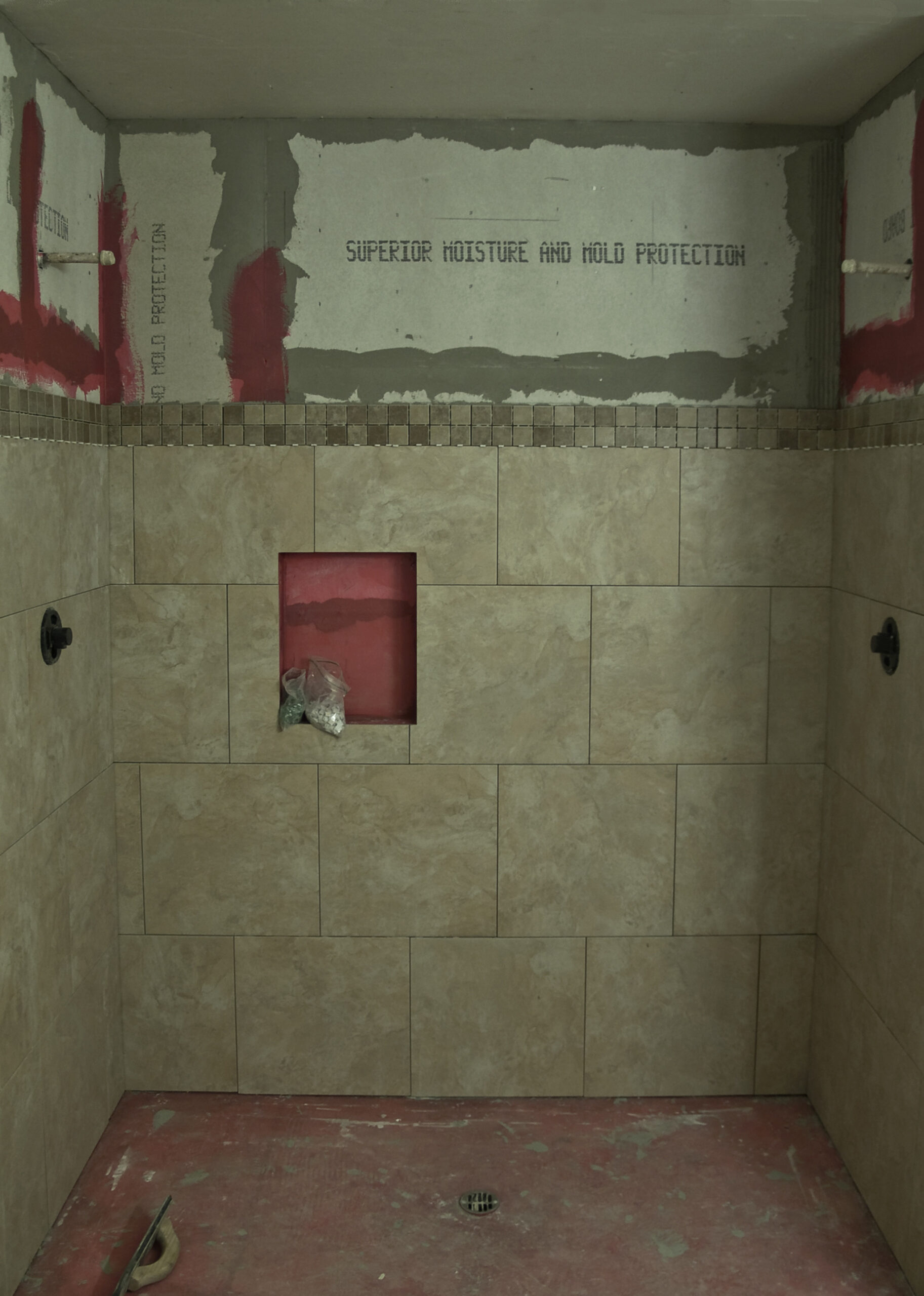
- Treatment of seams, corners, niches, benches and plumbing penetrations.
- The connection between the waterproofing and drain.
- The applicable manufacturer installation documents.
- Testing and inspection responsibilities before finishes conceal the work.
For a manufactured base with wall panels, request the exact models and their installation instructions rather than substituting a tiled-shower detail.
Also ask where testing sits in the schedule. For its KERDI assemblies, Schluter strongly recommends a water test before tile and specifies a minimum 24-hour wait after membrane installation before testing, while directing installers to local plumbing requirements. Those instructions should not be generalized to every product. (assets.schluter.com)
Your practical check is documentary: Can the contractor explain the complete assembly and show which instructions govern it? A line reading only “waterproof and tile shower” leaves that question unanswered.

4. Separate plumbing, ventilation and finish restoration
Use three distinct headings when requesting clarification.
Plumbing: Ask what stays, what changes and what remains subject to inspection after opening the room. Request separate treatment of drain work, supply piping, concealed valves and visible trim. For a conversion, ask the plumber to confirm compatibility with the proposed shower rather than assuming the tub connections settle the question.
Ventilation: Ask whether the contractor will assess the existing fan and duct, retain or replace them, and verify outdoor discharge. EPA explains that a running motor alone does not establish adequate ventilation: the fan must exhaust sufficient air directly outdoors, not into an attic or another interior space. (epa.gov)
Request the proposed fan model, controls, duct-work scope and verification method. Do not accept “new fan” as the complete ventilation description; EPA’s guidance makes both performance and discharge location relevant. (epa.gov)
Finish restoration: Require a written boundary for drywall repairs, painting, baseboards, floor transitions and repairs to adjacent rooms. Ask:
“After the plumbing and shower work is complete, which affected surfaces will you return to a finished condition?”
For each surface, specify whether the price covers a local patch, an entire wall or the whole room. This is a scope decision to resolve before signing, not a detail to leave to the final walkthrough.
5. Turn accessibility goals into specific design requirements
If easier bathing is a central reason for remodeling, describe the person’s needs before choosing the shower package. Ask the designer or contractor to document:
- Entry and threshold arrangement.
- Clear opening and movement space.
- Seat location, if needed.
- Control and handheld-shower reach.
- Grab-bar locations and support details.
- Door movement and access for assistance.
- Flooring suitability for the intended use.
The Cost vs. Value universal-design example is useful because it treats accessibility as a room-wide project, including the doorway, bathing area, vanity, controls and storage—not merely tub removal. It is an example specification, not a personalized design for your household. (jlconline.com)
Ask for a drawing showing the selected products and clearances. Have the contractor explain any proposal described simply as “accessible” or “ADA-style”; request the actual design criteria rather than relying on the label.
For grab bars, request the support detail before walls close. Schluter’s KERDI-BOARD shower guidance, for example, calls for anchorage into structure or solid blocking. That requirement illustrates why accessory placement belongs in construction planning, not just finish selection. (assets.schluter.com)
6. Use this quote-comparison worksheet to expose omissions
Copy this worksheet into a document and have each bidder complete it. It expands on the FTC’s recommendation to obtain written descriptions of work, materials, timing and price. (consumer.ftc.gov)
Use I = included, E = excluded, A = allowance, U = unanswered. An allowance is a stated budget provision; ask exactly what it covers and how the final charge will be reconciled.
| Comparison item | Quote A | Quote B | Required clarification |
|---|---|---|---|
| Demolition and disposal | What is removed, protected and hauled away? | ||
| Retained fixtures and finishes | What remains, and who handles damage? | ||
| Fixture supply | Exact models or allowance amounts? | ||
| Plumbing | Connections only, valve work or relocation? | ||
| Shower assembly | Base, walls, waterproofing and drain specified? | ||
| Testing and inspections | Who arranges them and documents completion? | ||
| Enclosure | Curtain, standard door or specified glass? | ||
| Ventilation and electrical | Assessment, equipment, ducting and controls? | ||
| Finish restoration | Which floors, walls, trim and adjacent spaces? | ||
| Permits and fees | Which approvals, and who obtains them? | ||
| Tax and delivery | Included, excluded or calculated separately? | ||
| Concealed-condition work | Approval process and pricing method? | ||
| Schedule and bathroom access | Dependencies and periods without facilities? |
Then request a revised total for the same agreed scope, with unresolved items listed separately.
Do not enter zero for missing work. Do not add a guessed repair amount and treat the result as a contractor commitment. Keep your own contingency reserve separate from the contractor’s price, and ask for written pricing of foreseeable alternatives.
7. Check permits, contract terms and completion requirements
Permit decisions must follow the project’s jurisdiction and actual work—not the marketing name of the package.
For example, Seattle’s published 2021 Plumbing Code requires permits for regulated plumbing installation, alteration, repair, replacement or remodeling, subject to specified exemptions. Its repair exemptions are limited; retaining fixture locations does not by itself establish an exemption. Confirm the applicable requirements with the authority before work starts, and separately ask about building, electrical and ventilation-related approvals. (seattle.gov)
Before signing, request:
- A final scope and product/allowance schedule.
- Explicit exclusions and owner responsibilities.
- A payment schedule tied to defined progress.
- A written change-order process covering price and schedule effects.
- Estimated start and completion dates, with dependencies identified.
- Warranty documents and a clear service contact.
- A closeout list covering applicable approvals, operating instructions and unfinished-item resolution.
Verify the contractor’s required credentials with the relevant government authority and request proof of insurance. The FTC also advises against paying the full project price upfront and flags pressure for an immediate decision as a warning sign. (consumer.ftc.gov)
The final decision should be between understandable proposals for comparable work. If a contractor cannot clarify what the price includes, the quote is not ready to compare—regardless of how attractive its headline total appears.